Altitude's Hidden Influence on Outcomes in Elevated Soccer, Tennis, and Racing Events
Written by Jakob Schmid · Aug 28, 2026
Altitude's Hidden Influence on Outcomes in Elevated Soccer, Tennis, and Racing Events
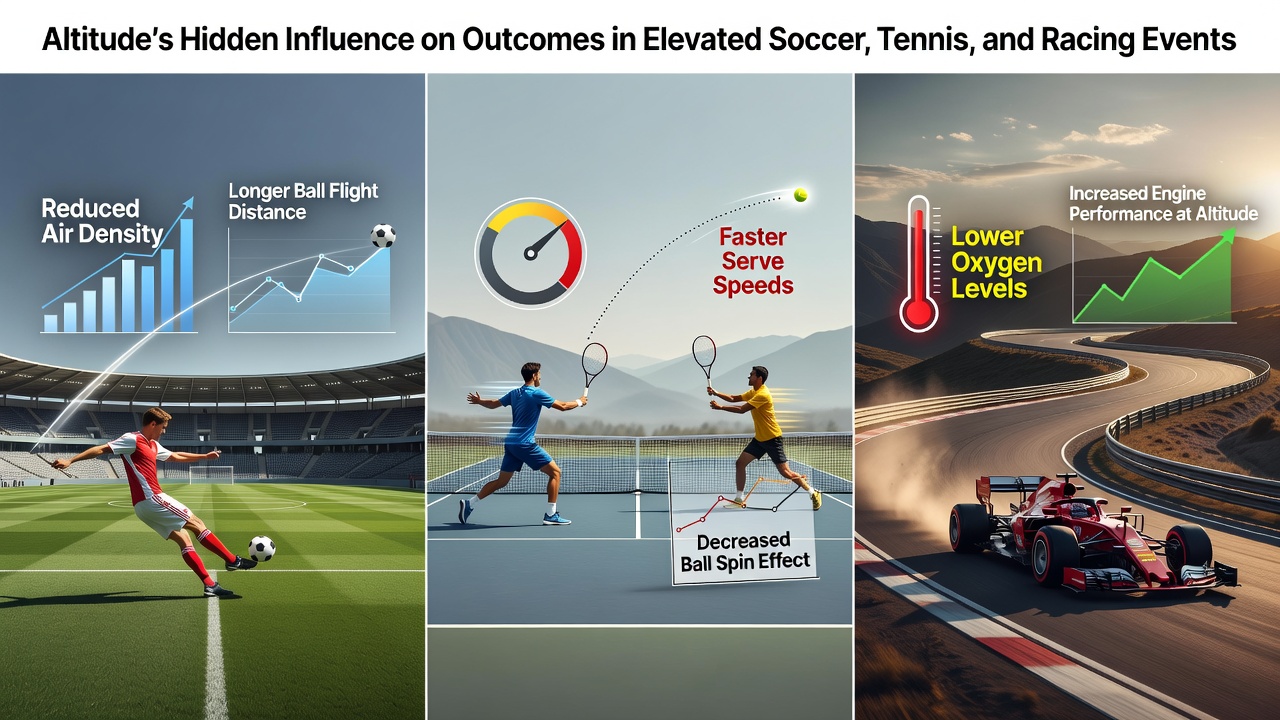
Researchers have documented how reduced oxygen levels at elevations above 2,000 meters alter physical performance, equipment behavior, and recovery times across multiple sports. Data from physiological studies show that air density drops by roughly 20 percent at 3,000 meters, which changes both human endurance and projectile dynamics in predictable ways. Soccer matches played in venues such as Bolivia's Estadio Hernando Siles demonstrate these effects clearly, with visiting teams recording lower distances covered and fewer high-intensity runs in the second half according to GPS tracking collected during CONMEBOL qualifiers. Ball flight also extends farther because thinner air reduces drag, leading to higher percentages of long-range shots reaching the target. Tennis events scheduled at comparable heights reveal similar patterns. Tournaments held in Bogotá and Mexico City have produced serve-speed averages that increase by several kilometers per hour compared with sea-level baselines, while rally lengths shorten as players fatigue faster. Match statistics compiled over multiple seasons indicate that tiebreak frequency rises when courts sit above 2,500 meters, reflecting both the altered bounce of the ball and the reduced capacity for sustained defensive movement.Soccer Performance at Elevation
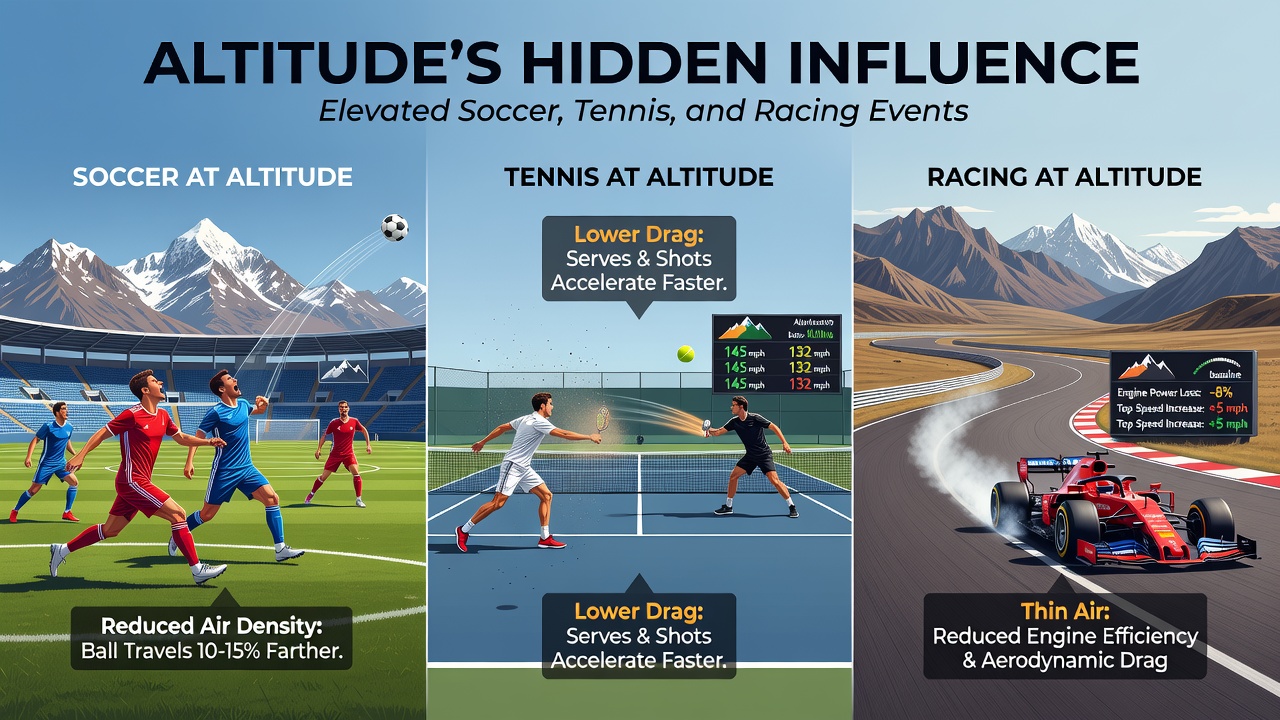
National teams accustomed to sea-level training often require several days of acclimatization before competitive fixtures in Andean stadiums. FIFA medical guidelines note that arterial oxygen saturation can fall below 90 percent during intense efforts, prompting measurable declines in repeated sprint ability. Home sides in La Paz and Quito have historically posted win rates above 70 percent in World Cup qualifiers, a figure supported by match logs spanning two decades. Visiting squads that arrive without prior exposure record fewer completed passes in the final third, while set-piece conversion rates shift because the ball travels farther and faster through the thinner atmosphere.
Tennis Dynamics in Mountain Venues
ATP and WTA events staged at altitude introduce additional variables. The reduced air resistance allows serves to maintain velocity longer, yet the same condition causes the ball to skid lower on impact. Players who rely on heavy topspin must adjust racket angles because the Magnus effect weakens. Data aggregated from Challenger and ITF tournaments in South American highlands show that match durations average 12 minutes shorter than comparable events at low elevation, largely due to elevated error rates on longer exchanges. Recovery between points also lengthens as heart rates remain elevated, altering tactical choices during extended sets.
Racing Conditions Above 2,000 Meters
Horse racing at elevated tracks presents distinct physiological challenges for both equine athletes and riders. Studies conducted by veterinary researchers at Colorado State University indicate that maximum oxygen uptake in thoroughbreds decreases measurably once tracks exceed 1,800 meters, resulting in slower sectional times after the halfway point. Jockeys experience parallel reductions in aerobic capacity, which can influence split-second decisions during late-race maneuvers. Tracks in regions such as the Andean plateau and certain North American mountain circuits record higher instances of horses finishing outside expected margins when shipping from lower elevations without adequate preparation time.
Environmental measurements further show that wind patterns at altitude often intensify in the afternoon, adding another layer of variability to race outcomes. Handicappers reviewing past performances at these venues note that early speed figures carry less predictive weight because late closers sometimes benefit from the thinner air once the field has spread out. Equipment adjustments, including lighter saddle cloths and modified breathing apparatus for horses, appear in some jurisdictions where regulatory bodies permit such modifications.
Cross-Sport Patterns and Data Trends
Comparative analyses across the three disciplines highlight recurring themes. Recovery intervals lengthen uniformly once oxygen partial pressure drops, and projectile or animal performance metrics shift in directions that favor certain styles of play or running. Sports science teams monitoring athletes with wearable sensors have observed consistent heart-rate spikes during the initial 24 hours after arrival, followed by gradual normalization only after 72 hours or more. These timelines influence scheduling decisions for federations and tournament organizers alike.
August 2026 calendars already list several high-profile fixtures at altitude, including a CONMEBOL qualifier and a series of ATP-sanctioned events in the Andes. Preparatory camps organized by national associations increasingly incorporate simulated altitude chambers to accelerate adaptation, a practice documented in training reports released by the Australian Institute of Sport and similar European centers.
Conclusion
Altitude continues to shape results in soccer, tennis, and racing through measurable changes in physiology, equipment behavior, and environmental conditions. Organizations that compile performance databases now routinely segment results by elevation to improve predictive models. As more events rotate through highland venues, the patterns identified in existing research offer a factual basis for anticipating how outcomes may differ from those recorded at sea level.