Rest and Recovery Cycles: Measurable Effects on Football Squad Rotations, Tennis Player Endurance, and Racehorse Freshness in Consecutive Fixtures
Written by Jakob Schmid · Aug 20, 2026
Rest and Recovery Cycles: Measurable Effects on Football Squad Rotations, Tennis Player Endurance, and Racehorse Freshness in Consecutive Fixtures
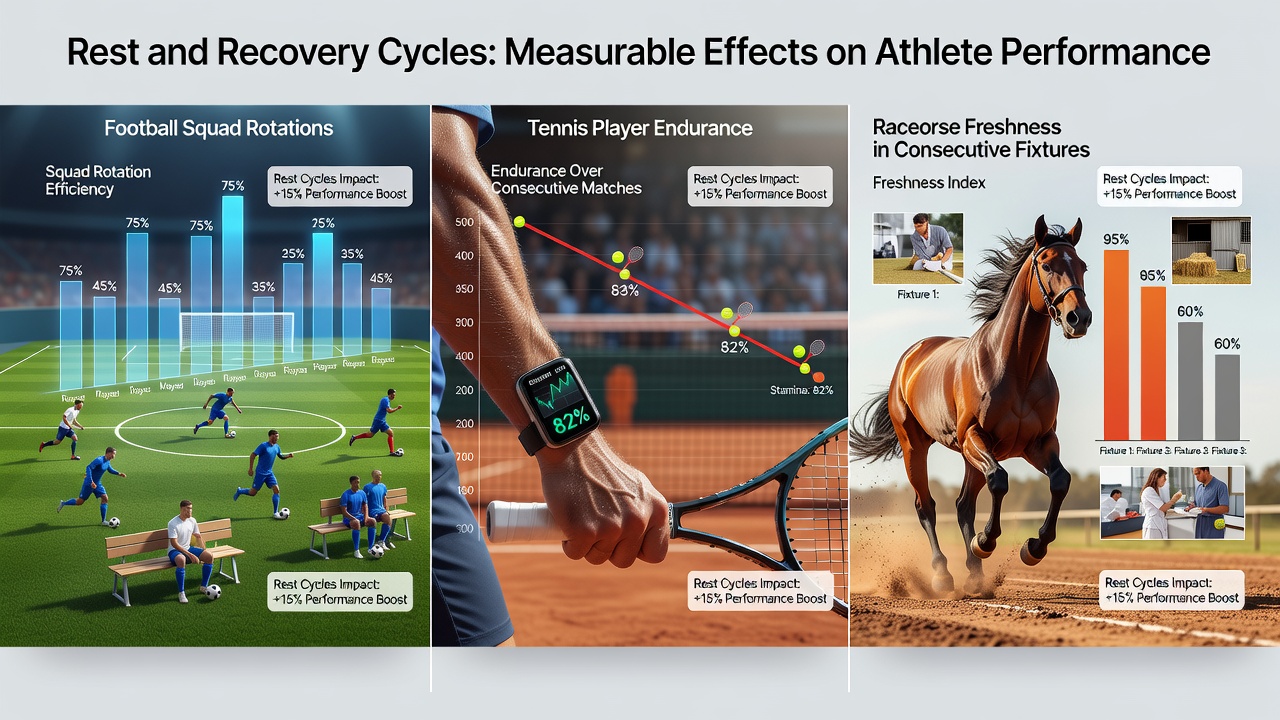
Rest and recovery cycles shape performance across multiple sports where consecutive fixtures demand sustained output, and data from performance tracking systems reveals clear patterns in how downtime influences results. In football, squad rotation decisions often hinge on recovery metrics such as heart rate variability and muscle oxygen saturation levels, while tennis schedules pack matches into tight windows that test player endurance through repeated high-intensity efforts. Racehorse trainers meanwhile monitor freshness indicators like stride length consistency and blood lactate clearance to maintain competitive edges over successive races.
Football Squad Rotations and Recovery Metrics
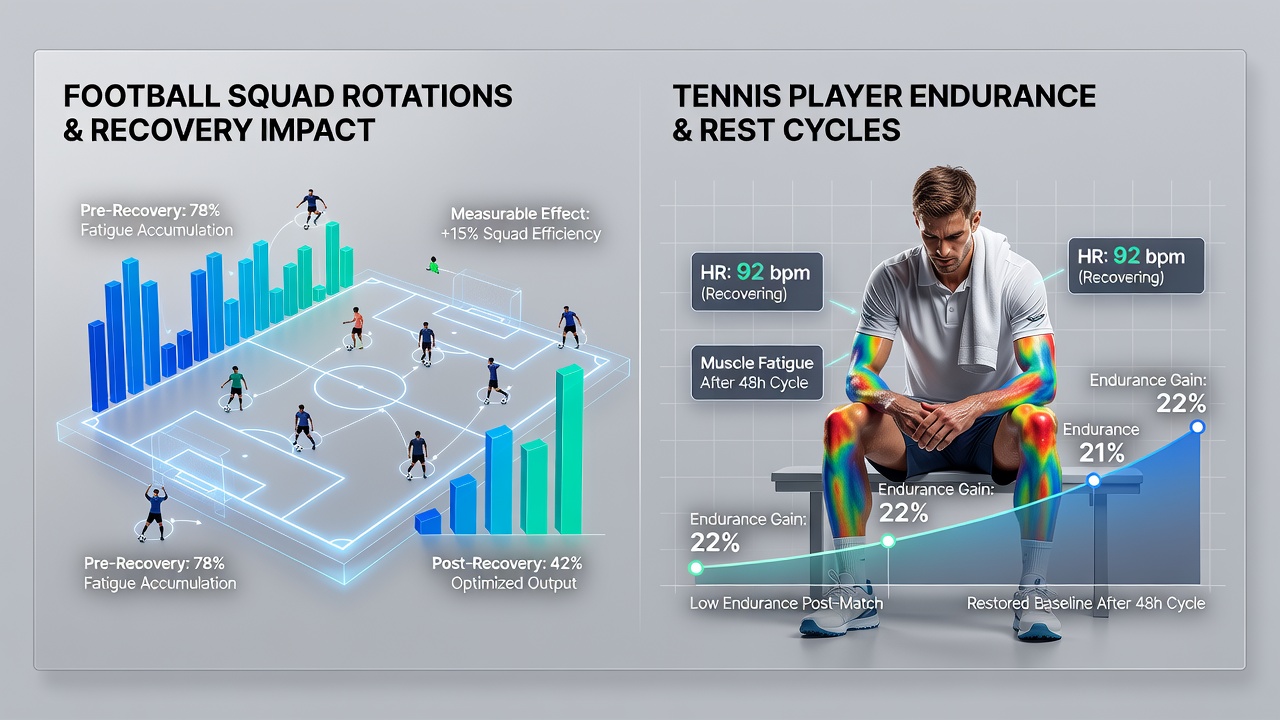
Coaches rely on GPS and wearable data to determine rotation needs, and studies from the American College of Sports Medicine indicate that players given 72 to 96 hours between matches cover 8 to 12 percent more high-speed distance than those with shorter intervals. Teams in the English Premier League and UEFA competitions track internal load through session RPE scores alongside external metrics, which allows medical staff to identify when full recovery has occurred and reduce injury rates linked to accumulated fatigue. Observers note that clubs rotating at least four out of eleven starters during midweek fixtures maintain squad-wide sprint outputs closer to baseline levels throughout an August 2026 schedule packed with domestic and European commitments.
Recovery protocols extend beyond passive rest and include active strategies such as low-intensity pool work and nutrition timing, while evidence from longitudinal monitoring shows that players adhering to individualized sleep targets above seven hours per night demonstrate faster return of neuromuscular function measured via countermovement jumps. Data indicates that inadequate recovery windows correlate with elevated creatine kinase levels persisting beyond 48 hours, prompting rotation adjustments that protect key assets during congested periods.
Tennis Player Endurance Across Tournament Schedules
Professional tennis circuits feature back-to-back tournaments where best-of-three or best-of-five set formats test endurance, and research published through Canadian sports science networks highlights that players receiving at least 24 hours between matches sustain first-serve percentages above 62 percent more consistently than those competing on consecutive days. Recovery focuses on rehydration protocols and cryotherapy sessions that accelerate clearance of metabolic byproducts, allowing competitors to preserve movement efficiency during later rounds.
Endurance markers such as VO2 max utilization and groundstroke velocity drop when rest falls below optimal thresholds, whereas athletes who incorporate periodized training blocks between events show steadier performance curves. In August 2026, the hard-court swing leading into the US Open will again test these patterns as players navigate qualifying rounds and main draws with limited turnaround times.
Racehorse Freshness in Successive Outings
Thoroughbred campaigns require careful spacing of races to preserve freshness, and findings from the Australian Racing Board demonstrate that horses rested 14 to 21 days between starts maintain peak velocity over final furlongs 5 to 7 percent higher than those running on seven-day turnarounds. Trainers assess readiness through veterinary checks including endoscopic evaluations and bloodwork that track muscle enzyme levels, while those who study these cycles recognize how cumulative stress from travel and training affects stride frequency and recovery heart rates.
Consecutive fixtures in major festivals place additional demands on equine athletes, yet programs incorporating structured canters and turnout time between engagements help sustain competitive freshness. Records from European racing authorities reveal that horses with recovery intervals exceeding 10 days post-long-distance events post lower rates of post-race lameness and return stronger speed figures in follow-up starts.
Cross-Sport Patterns in Recovery Application
Although the physical demands differ, common threads emerge when comparing how rest intervals influence output across these disciplines, and performance analysts track variables like repeat sprint ability in football, rally tolerance in tennis, and sectional timing in racing to quantify freshness. Teams and connections that align rotation or scheduling with objective recovery data achieve more stable results over extended campaigns, whereas compressed schedules without adequate downtime produce measurable declines in key performance indicators.
Conclusion
Rest and recovery cycles deliver measurable impacts on squad management, player endurance, and equine performance when consecutive fixtures compress available downtime, and ongoing data collection from wearables, medical monitoring, and race analysis continues to refine understanding of optimal intervals. Those managing athletes across football, tennis, and racing integrate these insights to sustain output levels throughout demanding calendars.